In May of 2010, we met little Ambar. Ambar Arely Salas was only four years old when her leg was crushed by a truck. Paper Houses paid for her surgery and her first prosthetic limb. As she grew, we replaced the prosthesis, supported additional surgeries when needed, and learned—step by step— how to help a child live and thrive after such a loss.
Ambar graduated from Primary School, Secondary School, and High School!
Because we work with hundreds of children, support school meal programs, visit shelters, guide blind students, and walk the colonias on every trip, it isn’t always possible to revisit every child we once helped. But recently we had the chance to return and learn what became of Ambar.
We expected to find a young woman around twenty. What we found was far more beautiful: Ambar not only graduated from high school—she recently graduated from college. She majored in education and will soon become a teacher.
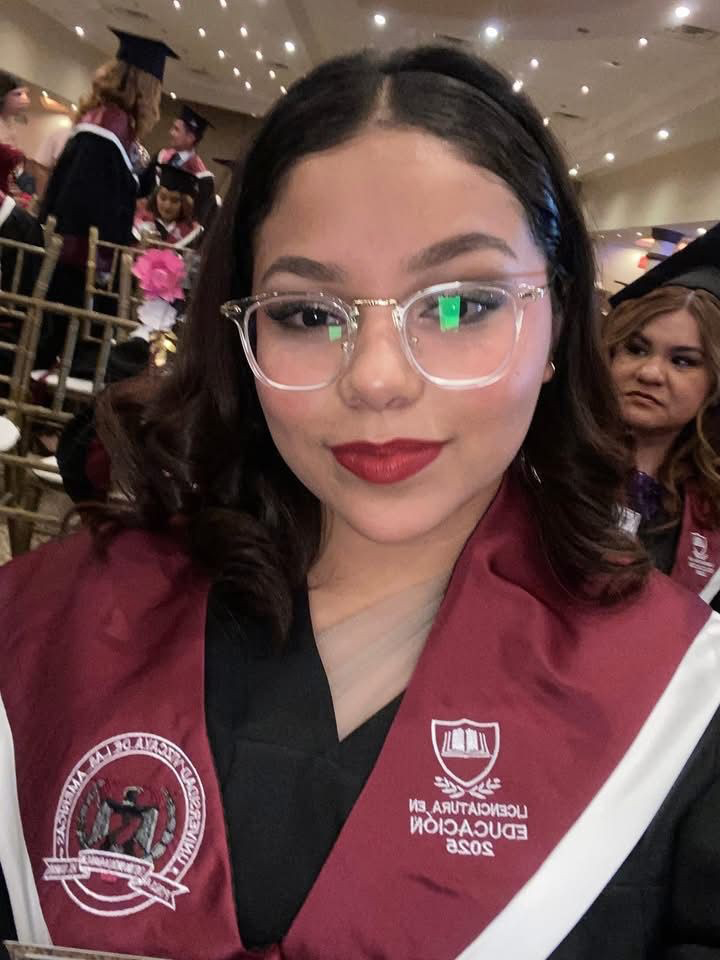
You changed the course of her entire life. Your generosity made her surgeries possible. Your kindness fueled her hope. And Ambar, unknowingly, became the first link in something we now call a chain of hope.
Because of Ambar, we met a little boy named Juan Pedro—and his story changed us again.
Juan Pedro – The Second Link in the Chain
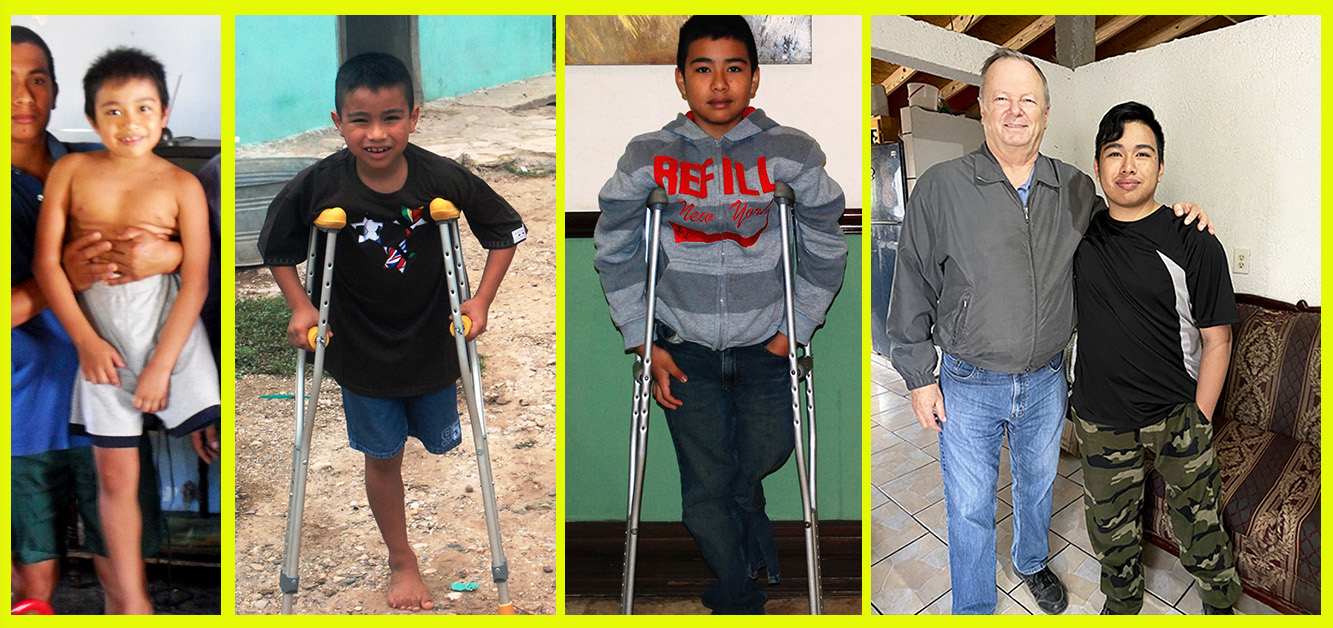
Juan Pedro’s story began with a chance meeting. While Ambar’s mother waited at the hospital for her daughter’s appointment, she struck up a conversation with another woman in the waiting room. That woman was Juan Pedro’s mother. She explained that her son—a little boy about five years old—had also lost his leg.
Ambar’s mom told her, “You need to call Paper Houses. They helped my daughter. Maybe they can help your son.” A few days later, Juan Pedro’s mother reached out, and we arranged a visit.
When we drove up to their small home, a tiny boy with one leg burst into a huge smile and began hopping as fast as he could toward us. Laughing, he called to his mother, “They’re here!”
Inside their simple house, his mother thanked us for coming. We asked her to tell us what happened.
She explained that her son had been jumping on the sofa, fell, and hurt his knee. He could still stand and walk, but he continued saying his leg hurt. When she took him to the public hospital for the poor, the doctor insisted nothing was wrong and told her he was exaggerating.
She returned to this hospital several more times. Each time the doctor said there was nothing wrong with his leg and the Juan just likes to complain. She knew her son. He was not a child who complained. Something was wrong.
A neighbor gave her the name of a private doctor who often helped the poor. That doctor examined the boy and immediately recognized the seriousness of the injury. He sent them to a different hospital, where she finally learned the truth: the delay in treatment had caused a severe infection. Her little boy’s leg could not be saved. It was amputated.
During a follow-up visit, she met Ambar’s mother in the waiting room and learned about Paper Houses—and about hope. When I tried to tell her that we would certainly help her son, she kept interrupting me. She said she needed to show me something first.
She placed a shoe box on her small kitchen table and opened it. Inside were every school progress report, every drawing, and every piece of schoolwork her son had ever made.
“He is a very, very good boy,” she said. “He works so hard. Please… please help him.”
Every time I tried to tell her we already intended to help, she cut me off and continued showing me his papers, as if she feared that if she stopped, I might say no.
Of course, we helped.
Juan Pedro received surgery and his first prosthetic leg. A few months later, his school invited us to visit. I assumed they wanted to thank us privately and perhaps introduce us to other children in need.
But when we arrived, the entire school—children, teachers, and staff—was gathered outside. Local news cameras were there. The principal spoke publicly about the boy whose life had changed because people on the other side of the border cared enough to act.
Little Juan stood there on crutches, beaming with a smile that could light up the world.
Today, he is in college. His dream is to become a doctor.
He told me, “I will help children who lose a leg. I can listen to them and promise their lives will get better. And then I can roll up my pants and show them my leg.”
A Chain That Never Ends
Ambar helped Juan Pedro. One life opened the door to another. And now, someday, Juan will help children we will never meet.
That is the Chain of Hope. You create links . . .
There is no way to know how many children will be touched by Ambar, by Juan Pedro, and by all the children each of them will one day help. This chain is alive. It is growing. And through your kindness, you were there at the very beginning.